
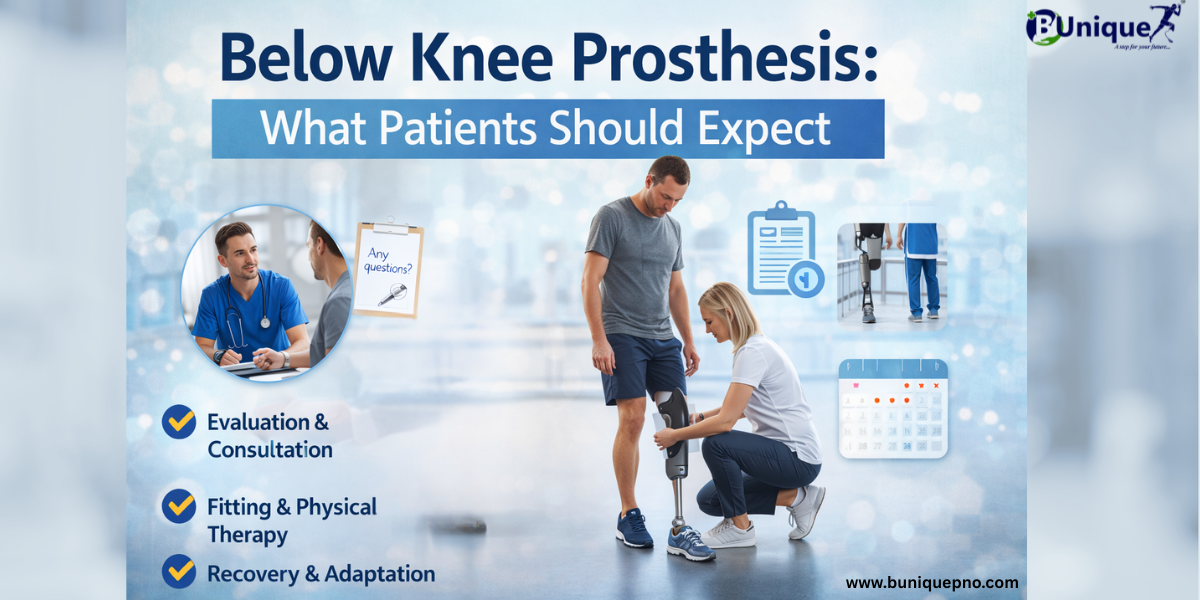
A Below Knee Prosthesis plays a crucial role in restoring independence and mobility after limb loss. For many patients, understanding the journey ahead can reduce anxiety and help them prepare physically and emotionally. Whether you’re newly amputated or supporting someone in recovery, knowing the stages, expectations, and rehabilitation process is essential.
This comprehensive below knee prosthesis patient guide explains everything from healing to walking, including the below knee prosthesis fitting process, recovery, rehabilitation, and long-term care.
Understanding a Below Knee Prosthesis
A Below Knee Prosthesis is an artificial limb designed for individuals who have undergone a below knee amputation prosthesis procedure. Since the knee joint is preserved, patients typically experience better mobility and faster adaptation compared to above-knee amputations.
The primary goal of a Below Knee Prosthesis is to restore movement, improve balance, and help patients regain independence in everyday life. Many individuals notice significant below knee prosthesis mobility improvement once they begin rehabilitation.
Patients often ask about prosthetic leg below knee expectations, and the reality is that most users return to normal routines, including walking, working, and light physical activities.
Healing and Recovery Timeline
The Below Knee Prosthesis journey starts with healing. The below knee prosthesis healing timeline varies depending on overall health, surgery type, and rehabilitation progress. Generally, initial healing takes 4–8 weeks before prosthetic fitting begins.
During below knee prosthesis recovery, patients focus on:
- Reducing swelling
- Strengthening muscles
- Preparing the residual limb
- Improving balance
Understanding what to expect with below knee prosthesis during this stage helps patients stay motivated. The early phase of life after below knee amputation includes physical therapy, wound care, and emotional support.
The below knee prosthesis adjustment period begins once the prosthetic limb is introduced. This phase allows the body to adapt gradually while improving comfort and mobility.
Types of Below Knee Prosthesis

There are multiple types of below knee prosthesis designed to suit different lifestyles and activity levels. Your prosthetist will recommend options based on your goals and mobility needs.
Common types of below knee prosthesis include:
- Basic walking prosthesis
- Lightweight prosthetic limb
- Dynamic response foot prosthesis
- Sports prosthesis
- Microprocessor prosthesis
Understanding the below knee prosthetic limb guide helps patients choose the right solution. Each design offers unique below knee prosthetic leg benefits, such as improved comfort, flexibility, and durability.
The right selection supports below knee prosthesis for daily activities and enhances independence.
Below Knee Prosthesis Fitting Process
The Below Knee Prosthesis fitting process is a structured and personalized approach. It ensures proper comfort, alignment, and performance.
Steps in the below knee prosthesis fitting process:
- Residual limb evaluation
- Measurement and casting
- Test socket fitting
- Alignment adjustments
- Final prosthesis delivery
During this stage, patients receive guidance on below knee prosthesis for beginners, including how to wear and remove the prosthetic limb safely.
Understanding prosthetic leg below knee expectations helps reduce anxiety. The fitting phase also marks the beginning of below knee prosthesis rehabilitation.
Rehabilitation and Learning to Walk
Below knee prosthesis rehabilitation is essential for regaining mobility. Physical therapy focuses on balance, coordination, and strength.
Patients gradually begin walking with below knee prosthesis using parallel bars and supervised training. Over time, they progress to independent walking.
The goals of below knee prosthesis rehabilitation include:
- Improving posture
- Strengthening muscles
- Increasing endurance
- Enhancing gait pattern
Many users experience noticeable below knee prosthesis mobility improvement within weeks. Learning walking with below knee prosthesis requires patience, but most patients achieve excellent outcomes.
The therapist also teaches below knee prosthesis care tips to ensure comfort and long-term usability.
Benefits of a Below Knee Prosthesis
A Below Knee Prosthesis offers several advantages for patients recovering from limb loss.
Major below knee prosthesis advantages include:
- Better balance
- Natural walking pattern
- Faster recovery
- Reduced energy use
- Greater mobility
These below knee prosthetic leg benefits significantly improve quality of life. Many users return to work, hobbies, and social activities.
Patients also notice improved independence in below knee prosthesis for daily activities such as:
- Walking indoors
- Climbing stairs
- Standing for long periods
- Driving
- Light exercise
The Below Knee Prosthesis helps restore confidence and supports life after below knee amputation.
Adjustment Period and What to Expect
The Below Knee Prosthesis adjustment period is different for each patient. Some adapt quickly, while others need additional time.
During this phase, what to expect with below knee prosthesis includes:
- Mild discomfort initially
- Learning weight distribution
- Muscle fatigue
- Frequent alignment adjustments
Following below knee prosthesis care tips helps reduce discomfort. Patients are encouraged to gradually increase usage time.
The below knee prosthesis recovery phase continues as users become more comfortable. Understanding prosthetic leg below knee expectations helps maintain realistic goals.
Daily Life With a Below Knee Prosthesis
A Below Knee Prosthesis supports independence in everyday routines. Most patients return to normal activities within months.
Common below knee prosthesis for daily activities include:
- Walking outdoors
- Household tasks
- Office work
- Shopping
- Light workouts
With consistent below knee prosthesis rehabilitation, users experience significant below knee prosthesis mobility improvement.
Adapting to life after below knee amputation becomes easier with practice. Many individuals resume hobbies and social life confidently.
Care Tips for Long-Term Comfort
Proper maintenance ensures durability and comfort. Follow these below knee prosthesis care tips:
- Clean the socket daily
- Check skin for irritation
- Keep liner dry
- Inspect components regularly
- Follow therapist instructions
These below knee prosthesis care tips help prevent complications. During the below knee prosthesis adjustment period, regular follow-ups are important.
Using this below knee prosthesis patient guide ensures safe usage and long-term success.
Cost of Below Knee Prosthesis
The below knee prosthesis cost depends on technology, materials, and customization. Basic models are more affordable, while advanced options provide enhanced performance.
Factors affecting below knee prosthesis cost:
- Type of prosthetic foot
- Socket design
- Materials used
- Technology level
- Custom fittings
Understanding types of below knee prosthesis helps choose the right balance between budget and functionality. Investing in quality improves below knee prosthesis mobility improvement and long-term comfort.
Tips for Beginners
For those new to prosthetics, this below knee prosthesis for beginners section helps ease the transition.
Key tips:
- Start slowly
- Follow therapy sessions
- Maintain hygiene
- Use support when walking
- Stay consistent
This below knee prosthetic limb guide supports confidence building. Patients gradually master walking with below knee prosthesis and regain independence.
The Below Knee Prosthesis journey becomes smoother with patience and proper guidance.
Final Thoughts
A Below Knee Prosthesis can significantly transform life after limb loss. From healing and fitting to rehabilitation and independence, each stage plays an important role. Understanding what to expect with below knee prosthesis helps patients stay prepared and confident.
With proper below knee prosthesis recovery, structured below knee prosthesis rehabilitation, and regular care, most individuals achieve excellent mobility. The Below Knee Prosthesis not only restores movement but also improves quality of life.
By following this below knee prosthesis patient guide, patients can confidently navigate life after below knee amputation and enjoy long-term independence.
Also Read: Prosthetics for Children: What Parents Need to Know
👉 Follow Us on Social Media! Stay Connected & Stay Ahead! 👇
📘 Facebook || 📸 Instagram || 💼 LinkedIn || 🎯 Twitter || 📌 Pinterest

0 Comments