
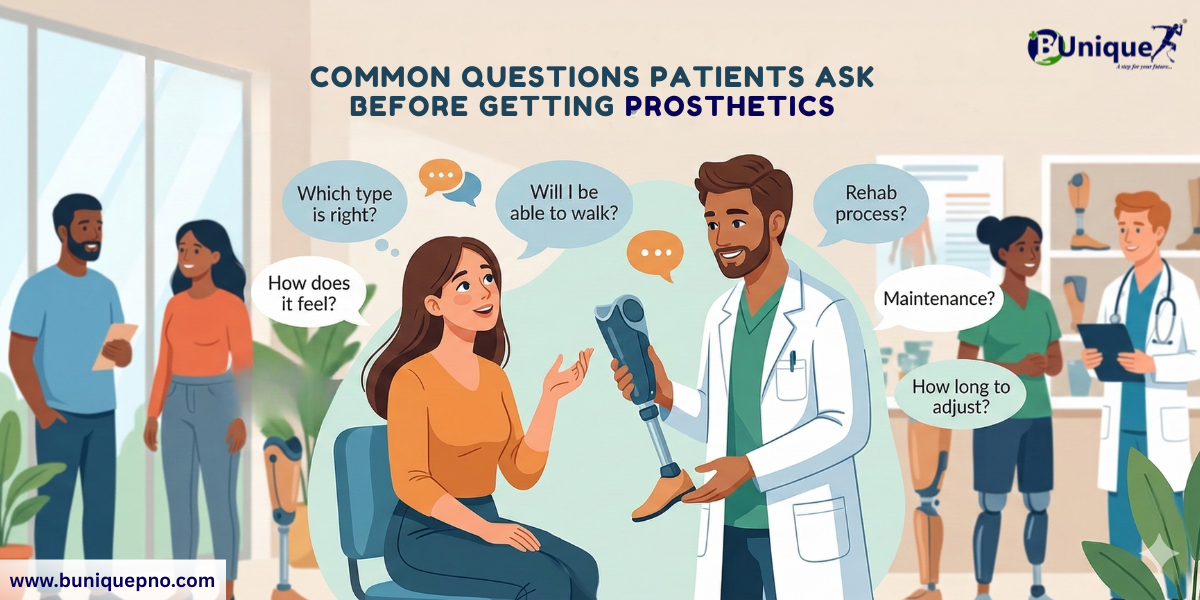
Losing a limb can be a life-changing experience, but modern prosthetic technology has made it possible for individuals to regain independence, mobility, and confidence. Today, advanced prosthetic solutions allow people to walk, perform daily tasks, and even participate in sports. However, before beginning this journey, patients often have several Common Questions About Prosthetics.
Many individuals want to understand the prosthetic treatment process, recovery time, comfort levels, and how prosthetics will affect their everyday life. Asking the right Questions before getting prosthetics helps patients prepare mentally and physically for this transition.
This article serves as a detailed Prosthetics patient guide, addressing the most Common Questions About Prosthetics and helping patients understand what to expect before starting treatment.
Understanding the Importance of Asking Questions Before Getting Prosthetics
Before receiving an artificial limb, it is natural to have many Questions before getting prosthetics. Patients often want to know how the prosthetic will function, how comfortable it will be, and how long the recovery process will take.
During the initial consultation, specialists address several Prosthetic consultation questions that patients may have. These questions help clarify the prosthetic treatment process, provide realistic expectations, and guide patients through their rehabilitation journey.
Many clinics also provide a Prosthetics for amputees guide that helps individuals understand the complete process from consultation to rehabilitation. This guide typically includes important Artificial limb consultation tips, recovery steps, and advice on prosthetic care and maintenance.
Understanding the answers to these Common Questions About Prosthetics helps patients feel more confident and prepared for their prosthetic journey.
What Should You Know Before Getting a Prosthetic Limb?
One of the most common Common Questions About Prosthetics is understanding what to know before getting a prosthetic limb. Patients often want to know how prosthetics work, what type of prosthetic is suitable for them, and what the rehabilitation process will involve.
Understanding what to know before getting a prosthetic limb helps individuals prepare physically and emotionally. Doctors often discuss several important factors during consultations, including overall health, healing progress, and mobility goals.
Patients are also given prosthetic limb preparation tips to ensure they are ready for the prosthetic fitting process. These prosthetic limb preparation tips may include strengthening exercises, maintaining proper limb hygiene, and preparing mentally for rehabilitation.
Learning what to know before getting a prosthetic limb also helps patients understand the prosthetic limb expectations during the recovery phase. Having realistic prosthetic limb expectations ensures that patients stay motivated throughout the rehabilitation process.
What Happens During a Prosthetic Consultation?

A prosthetic consultation is the first step in the prosthetic treatment process. During this stage, specialists answer important prosthetic consultation questions and evaluate the patient’s physical condition.
Common prosthetic consultation questions include:
- Which type of prosthetic limb is suitable for me?
- How long will the recovery take?
- What activities will I be able to perform?
- How comfortable will the prosthetic be?
During these consultations, professionals also provide artificial limb consultation tips that help patients understand the entire process. These artificial limb consultation tips help individuals prepare for their prosthetic journey and avoid common challenges.
Many healthcare providers include this information as part of a comprehensive prosthetics patient guide, ensuring that patients receive complete guidance before beginning treatment.
What Is the Prosthetic Fitting Process?
Another one of the most Common Questions About Prosthetics involves understanding the prosthetic fitting process. This process ensures that the artificial limb fits properly and provides maximum comfort and functionality.
The prosthetic fitting process usually involves several steps:
- Evaluation of the residual limb
- Taking measurements and creating molds
- Creating a temporary socket
- Testing the prosthetic limb
- Adjusting alignment and comfort
- Final prosthetic fitting
During this stage, patients often ask first prosthetic fitting questions regarding comfort, movement, and adjustments. These first prosthetic fitting questions help specialists make necessary modifications.
Understanding the prosthetic fitting process also helps patients set realistic prosthetic limb expectations and prepare for the rehabilitation phase.
How Long Does the Prosthetic Recovery Process Take?
The prosthetics recovery timeline varies depending on several factors such as overall health, healing progress, and commitment to therapy.
Generally, the prosthetics recovery timeline includes:
- Healing after surgery
- Initial prosthetic fitting
- Physical therapy and rehabilitation
- Long-term adaptation
Many patients ask about the prosthetics recovery timeline during their prosthetic consultation questions because they want to know when they can return to daily activities.
Following recommended prosthetic limb preparation tips and therapy sessions can help speed up the prosthetics recovery timeline and improve overall outcomes.
What Happens During Prosthetic Rehabilitation?
The prosthetic rehabilitation process is essential for helping patients adapt to their artificial limb. Rehabilitation includes physical therapy, balance training, and strength exercises.
During the prosthetic rehabilitation process, therapists help patients learn how to walk, climb stairs, and perform everyday activities. This stage also helps individuals build confidence and adapt to their prosthetic limb expectations.
The prosthetic rehabilitation process is often described in detail within a prosthetics for amputees guide, which explains exercises, therapy routines, and mobility training.
By following the rehabilitation plan, patients can fully experience the benefits of prosthetic limbs and regain independence.
What Are the Benefits of Prosthetic Limbs?
One of the most encouraging answers to the Common Questions About Prosthetics relates to the benefits of prosthetic limbs.
Modern prosthetic technology provides several advantages, including improved mobility and independence. Some of the major benefits of prosthetic limbs include:
Improved Mobility
One of the primary benefits of prosthetic limbs is restoring the ability to move freely. Patients can walk, perform daily tasks, and participate in social activities.
Increased Confidence
Another important benefits of prosthetic limbs is improved emotional well-being. Being able to move independently significantly boosts confidence.
Better Quality of Life
The benefits of prosthetic limbs also include the ability to return to work, hobbies, and sports.
Physical Health Improvements
Using prosthetics helps maintain balance, posture, and muscle strength.
Overall, the benefits of prosthetic limbs extend beyond mobility—they improve overall lifestyle and independence.
How Do You Take Care of a Prosthetic Limb?
Proper prosthetic care and maintenance is essential for ensuring comfort and durability.
Patients frequently ask Common Questions About Prosthetics regarding how to clean and maintain their artificial limbs. Good prosthetic care and maintenance practices include:
- Cleaning the socket regularly
- Checking for skin irritation
- Ensuring proper alignment
- Visiting specialists for adjustments
Regular prosthetic care and maintenance also helps prevent discomfort and ensures the prosthetic remains functional for years.
What Services Are Available for Prosthetic Patients?
Many clinics offer comprehensive prosthetics services for amputees, including consultation, prosthetic fitting, rehabilitation, and follow-up care.
These prosthetics services for amputees ensure that patients receive continuous support throughout the prosthetic treatment process.
Typical prosthetics services for amputees include:
- Artificial limb consultation
- Custom prosthetic design
- Rehabilitation therapy
- Prosthetic adjustments and upgrades
These services are usually outlined in a prosthetics patient guide, helping patients understand every step of their treatment journey.
Final Thoughts
Starting the prosthetic journey can feel overwhelming, but understanding the Common Questions About Prosthetics can make the process easier and less stressful. From questions before getting prosthetics to understanding the prosthetic fitting process, every stage plays an important role in recovery.
By learning what to know before getting a prosthetic limb, asking the right prosthetic consultation questions, and following proper prosthetic care and maintenance, patients can achieve successful rehabilitation.
With modern technology and professional prosthetics services for amputees, individuals can experience the full benefits of prosthetic limbs and regain independence in their daily lives.
Following the recommended prosthetic rehabilitation process and understanding the prosthetics recovery timeline ensures a smoother journey toward mobility and confidence.
Ultimately, addressing these Common Questions About Prosthetics helps patients feel informed, empowered, and ready to take the next step toward a more active and fulfilling life.
Also read: Signs You Need Custom Orthotics for Foot or Leg Pain
👉 Follow Us on Social Media! Stay Connected & Stay Ahead! 👇
📘 Facebook || 📸 Instagram || 💼 LinkedIn || 🎯 Twitter || 📌 Pinterest

0 Comments