
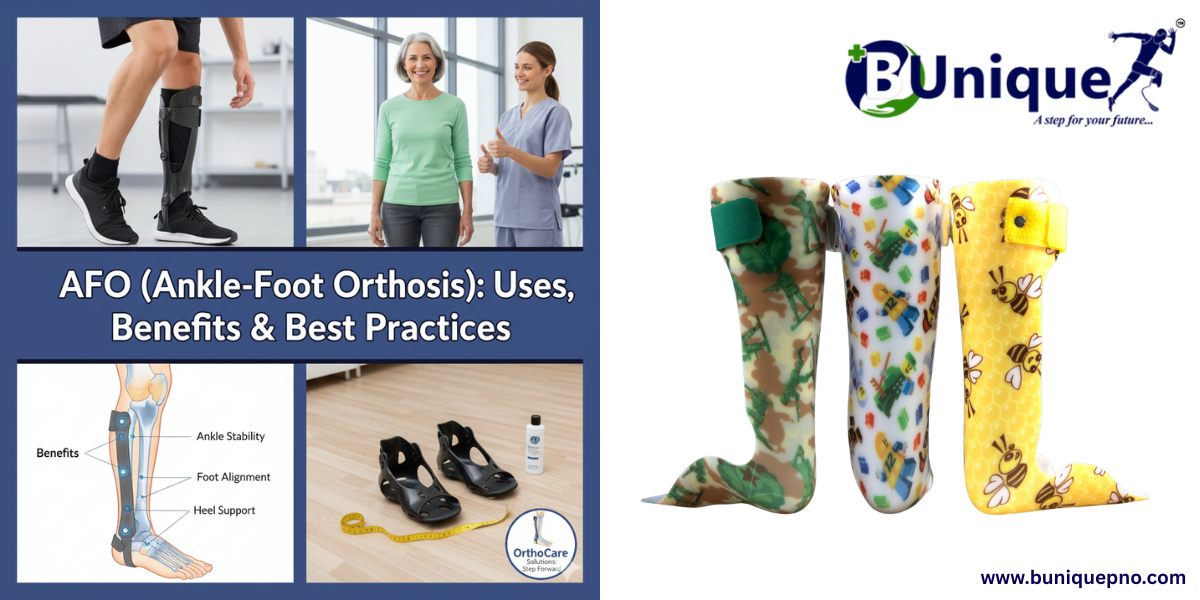
An AFO ankle-foot orthosis is one of the most commonly prescribed orthotic devices in modern rehabilitation. It plays a crucial role in stabilizing the ankle, improving gait, and restoring functional mobility for individuals with various neurological and muscular conditions. Whether someone is experiencing foot drop, muscle weakness, or post-stroke mobility challenges, an AFO can significantly enhance their quality of life.
At Bunique.com, many patients choose customized AFO solutions to meet their specific mobility needs. This guide explores AFO uses, AFO benefits, types of braces, fitting essentials, and best practices – helping you understand how this innovative device supports long-term rehabilitation.
What Is an AFO ankle-foot orthosis?
An AFO ankle-foot orthosis is an external support device worn on the lower leg and foot to maintain proper alignment, assist with walking, and prevent abnormal movements. Being a widely recommended orthotic device for leg support, it supports the ankle complex and ensures safer and more controlled mobility.
Whether custom-made or prefabricated, AFOs are designed to meet different needs, making them an essential part of AFO rehabilitation support programs for thousands of patients worldwide.
AFO Uses: Who Needs an AFO Brace?
Understanding AFO uses is important to identify whether you or a patient may benefit from this device. Healthcare and rehabilitation professionals recommend AFOs for conditions such as:
1. Foot Drop
One of the most common AFO uses is the management of foot drop. An AFO for foot drop helps lift the front of the foot during walking, preventing tripping and improving safety.
2. Muscle Weakness
Individuals with nerve damage, muscular disorders, or post-surgical weakness benefit greatly from an AFO for muscle weakness. The brace provides the structural support required to stand and walk effectively.
3. Stroke Recovery
An AFO for stroke patients is an integral part of gait rehabilitation. It improves balance, enhances step length, and reduces the risk of falls as patients relearn mobility patterns.
4. Walking Instability
Patients with poor balance or neurological gait issues often use an AFO for walking stability. This ensures that every step becomes more controlled and aligned.
5. Structural Alignment Issues
For structural deformities or biomechanical irregularities, an ankle-foot orthosis support device helps maintain correct alignment.
These AFO uses demonstrate how versatile and essential the device is in orthopedic and neurological care.
Types of AFO Braces
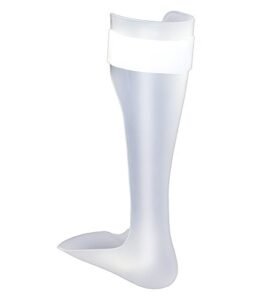
Just as needs differ, so do AFO designs. Understanding the types of AFO braces helps patients and clinicians make informed decisions.
Common types of AFO braces include:
1. Rigid AFO
Provides maximum stability, often recommended for severe AFO for foot drop cases and advanced weakness.
2. Hinged AFO
Allows controlled ankle movement and supports natural walking mechanics, ideal for moderate impairments.
3. Posterior Leaf Spring AFO
Designed for mild to moderate weakness, this lightweight orthosis is widely used for flexible ankle-foot orthosis support.
4. Custom-Molded AFO
Customized AFO orthotics offer a perfect fit and enhanced comfort, especially for long-term therapy.
5. Carbon Fiber AFO
Lightweight, durable, and ideal for active individuals needing AFO brace advantages while maintaining speed and agility.
Rehabilitation experts at Bunique.com often help patients choose the most suitable option based on gait analysis and personal comfort requirements.
AFO Benefits: How an AFO Improves Mobility
The AFO benefits extend far beyond basic foot support. Some key AFO brace advantages include:
✔ Improved Walking Efficiency
An AFO for walking stability enhances stride, reduces fatigue, and promotes symmetrical movement.
✔ Prevention of Trip & Fall
By addressing foot drop and alignment issues, an orthotic device for leg support significantly reduces fall risk.
✔ Muscle Activation & Rehabilitation
Some types of AFO braces stimulate muscle activity, aiding long-term recovery in AFO rehabilitation support programs.
✔ Pain Reduction
Proper alignment lowers strain on joints, reducing chronic pain in the ankle, knee, and hip.
✔ Better Balance
For neurological patients, an AFO for stroke patients helps maintain balance and improves confidence during walking.
✔ Long-Term Joint Protection
Consistent ankle-foot orthosis support prevents deformities and protects joints from excessive stress.
These AFO benefits show why so many patients rely on AFOs for daily mobility and improved independence.
Choosing the Right AFO Brace
Selecting the correct brace is essential for comfort and rehabilitation success. Here’s what to consider when choosing the right AFO brace:
1. Condition Severity
Mild weakness may require a lightweight AFO, while severe instability may benefit from rigid styles.
2. Daily Activity Levels
Active individuals may prefer carbon fiber AFOs due to their durability and energy return.
3. Fit & Comfort
A proper AFO fitting guide ensures that the brace aligns perfectly with your leg shape and gait pattern.
4. Customization Needs
Customized AFO orthotics offer an exact fit and improved comfort for long-term use.
Rehabilitation specialists at Bunique.com help patients understand these factors and select braces that maximize mobility and support.
How to Wear AFO Correctly
Wearing the device properly ensures maximum AFO benefits and prevents discomfort. Follow this how to wear AFO correctly guide:
- Always use appropriate socks to avoid skin irritation.
- Fit the brace inside a supportive shoe for proper ankle-foot orthosis support.
- Make sure straps are snug but not overly tight.
- Gradually increase wearing time, as advised in your AFO fitting guide.
- Ensure alignment with the heel and ankle for optimal gait mechanics.
Following how to wear AFO correctly guidelines ensures safety and supports effective recovery.
Best Practices for Using an AFO
Using the device the right way helps maximize AFO benefits and ensures long-term comfort. These best practices for using AFO apply to all types of AFO braces:
1. Start Slow & Increase Wearing Time
Gradually adapting helps your body adjust to the support.
2. Pair with Proper Footwear
Supportive shoes enhance ankle-foot orthosis support and functionality.
3. Check Skin Regularly
Ensure no redness or bruising from the device.
4. Continue Physiotherapy
Physiotherapy enhances AFO rehabilitation support and boosts muscle strength.
5. Prioritize Regular Adjustments
Proper fit ensures consistent orthotic device for leg support and avoids future complications.
These best practices for using AFO ensure the device works efficiently and comfortably.
AFO Maintenance Tips
To extend the life of the device, follow these AFO maintenance tips:
- Clean the brace regularly with mild soap.
- Check straps and padding for wear and tear.
- Avoid exposing the device to extreme temperatures.
- Have it professionally inspected at least twice a year.
These AFO maintenance tips help sustain the structure and performance of the device.
AFO in Rehabilitation: Supporting Long-Term Recovery
An AFO ankle-foot orthosis plays a crucial role in rehabilitation. Through consistent support, the device improves muscle activation, balance, and gait patterns.
Whether for AFO for muscle weakness, AFO for stroke patients, or AFO for foot drop, the brace provides the stability required for long-term improvement.
Patients at Bunique.com often report significant progress after incorporating their AFO into structured therapy sessions. With the right AFO rehabilitation support, independence becomes far more achievable.
Conclusion
An AFO ankle-foot orthosis is an essential mobility aid for individuals with gait instability, foot drop, or neurological impairments. Its wide range of AFO uses, combined with significant AFO benefits, makes it one of the most reliable orthotic device for leg support options today.
From understanding types of AFO braces to adopting best practices for using AFO, making informed decisions ensures long-term comfort and improved mobility. Whether you need help with choosing the right AFO brace, understanding how to wear AFO correctly, or learning AFO maintenance tips, expert guidance ensures the best outcomes.
For advanced, comfortable, and customized AFO orthotics, visit Bunique.com – your trusted destination for prosthetics, orthotics, and rehabilitation solutions.
Also Read: Diabetic Footwear vs Custom Orthotics: Which Is Right for You?
👉 Follow Us on Social Media! Stay Connected & Stay Ahead! 👇
📘 Facebook || 📸 Instagram || 💼 LinkedIn || 🎯 Twitter || 📌 Pinterest


0 Comments